I still remember the first time I brought a batch of these Fairy Garden Cookies to a spring potluck. People hovered over the plate like bees around blossoms. Someone whispered, “Did you grow these?” And honestly, that’s exactly the kind of magic they give off. Cookies that look like tiny enchanted gardens tucked into buttery rounds—colorful, fragrant, and just whimsical enough to make adults grin like kids.
These cookies aren’t complicated, but they feel special. Each one looks like a miniature meadow, dotted with edible flowers, sugared herbs, and pastel hues. They’re the type of treat that makes people pause for a second before taking a bite, just to admire the detail. And once they taste that soft, buttery crumb with the pop of gentle floral notes, well… you’ll probably need another tray.
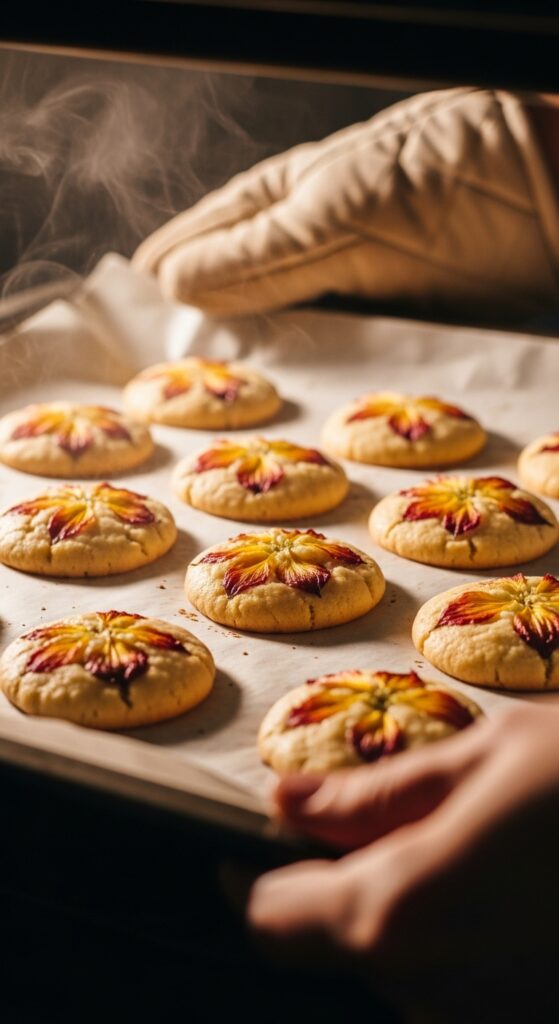
There’s something quietly joyful about making them. You slow down a bit. You decorate each cookie like its own tiny world. And it feels good—almost meditative. They’re perfect for tea parties, bridal showers, spring gatherings, or just to brighten a random Tuesday.
Why It’s Special
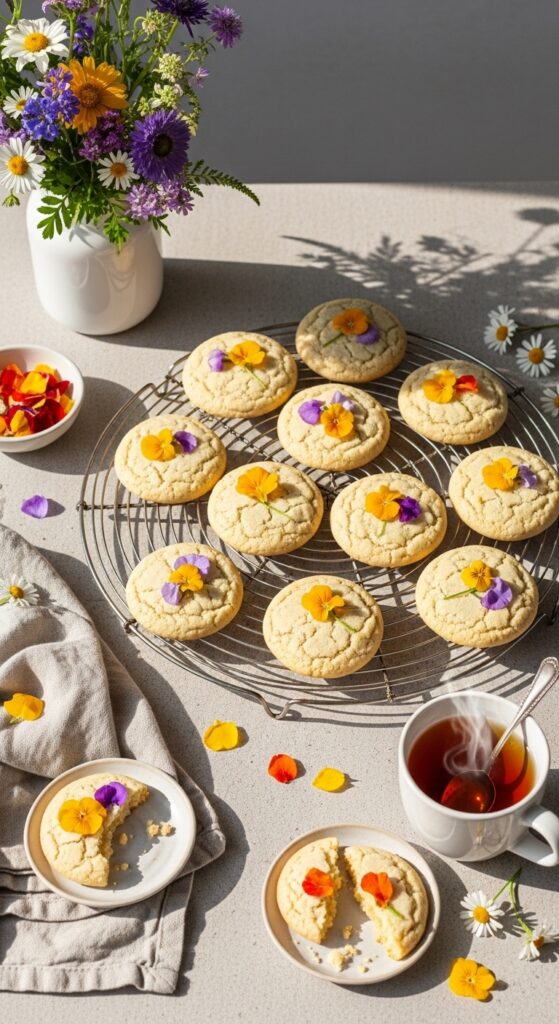
Fairy Garden Cookies combine a classic buttery shortbread-style base with edible flowers, herbs, and subtle flavorings like citrus zest or vanilla bean. They’re pretty, yes, but they’re also genuinely delicious. And they give you so much room for creativity.
You can tailor the “garden” on top of each cookie: violets, rose petals, chamomile blossoms, thyme flowers, mint tips, or even microgreens. They’re inspired by European tea-time biscuits decorated with botanicals, but they also lean into the playful side of modern baking. There’s no strict tradition here—just imagination.
They also teach you a bit about balance. Too many flowers and the flavor gets perfumey. Too few and you lose the magic. But once you find your groove, it’s like painting with petals.
Ingredients & Substitutions
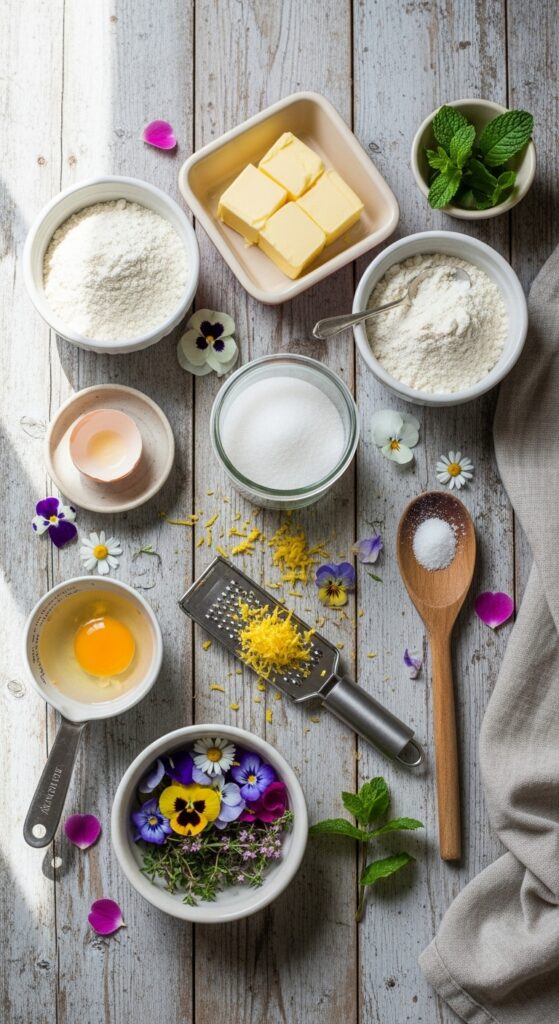
Let’s run through what you’ll need and some clever swaps if your pantry looks a little bare today.
All-purpose flour
Gives the cookies structure while staying tender. If you want a slightly more delicate crumb, swap ¼ cup for cornstarch.
Unsalted butter
Room-temperature butter is key. Soft but not melty. You can use salted butter—just reduce added salt in the recipe. Vegan butter also works, but choose a brand that stays firm at room temp.
Sugar
Regular granulated sugar works fine, though superfine sugar blends in more easily. Coconut sugar turns the cookies darker and gives a caramel smell—still good, just different.
Vanilla extract or vanilla bean
Vanilla bean paste feels downright luxurious and pairs beautifully with floral flavors. Lemon or orange zest can sub in if you want a citrus-forward version.
Edible flowers and herbs
Think violas, pansies, chamomile, rose petals, lavender (in tiny amounts), thyme flowers, mint. Just make sure they’re edible and free of pesticides. Don’t pluck from your neighbor’s planter unless you know they garden organically.
Egg (optional)
For pressing the flowers onto the surface, a light egg wash helps them stick. If you’re making vegan cookies, brush with oat milk or aquafaba.
Salt
Just enough to balance the sweetness. Don’t skip it.
Food coloring (optional)
A tiny dot of pastel color in the dough can give the cookies a dreamy glow, but totally optional.
Expert Ingredient Tips
Fresh flowers give better color; dried edible flowers taste nice but look muted.
Citrus zest brightens floral flavors so they feel lively, not perfume-like.
If using lavender, measure with the lightest hand—too much and you’ll drift straight into soap territory.
Step-by-Step Instructions
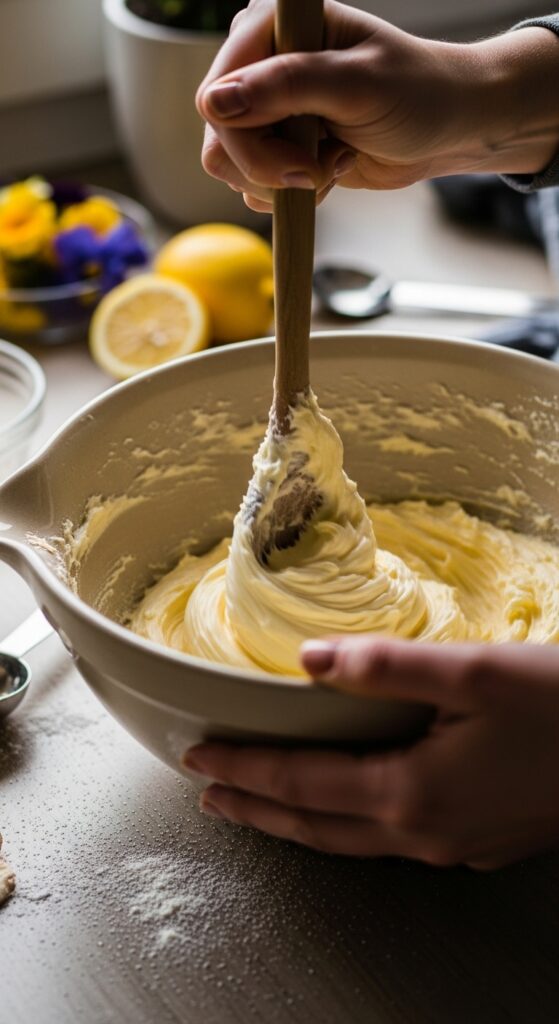
You’ll find a full recipe card below, but let’s break things down with some chef-y guidance.
1. Cream the butter and sugar
Mix until light and fluffy. This step is where your cookies get their lovely tender texture. Don’t rush it. If your butter is too cold, you’ll get a sandy dough.
2. Add vanilla and zest
If you’re using vanilla bean paste, you’ll see those pretty specks. That’s always a good sign.
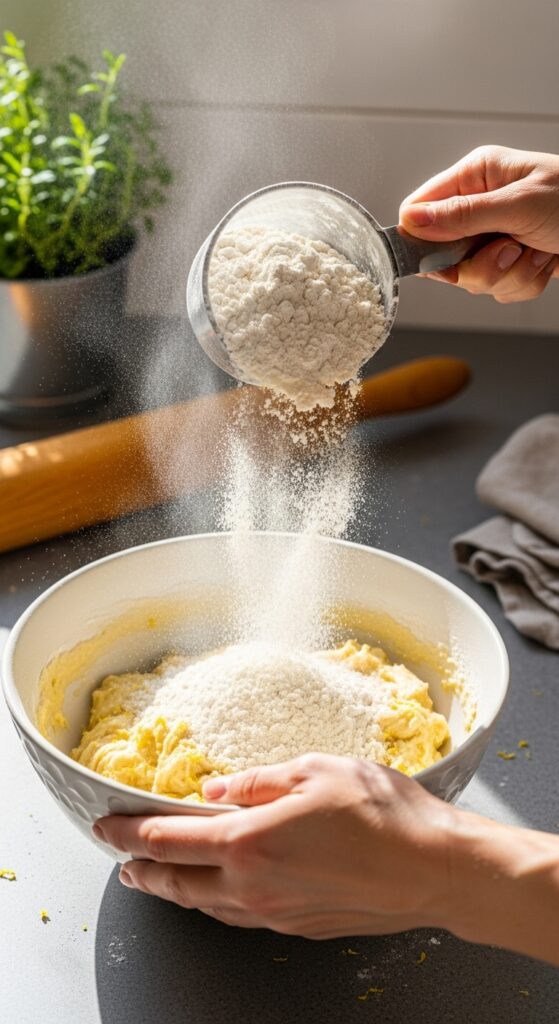
3. Mix in the flour
Add it gradually. The dough should come together soft and smooth, not sticky. If it crumbles, a teaspoon of milk (or water) brings it back.
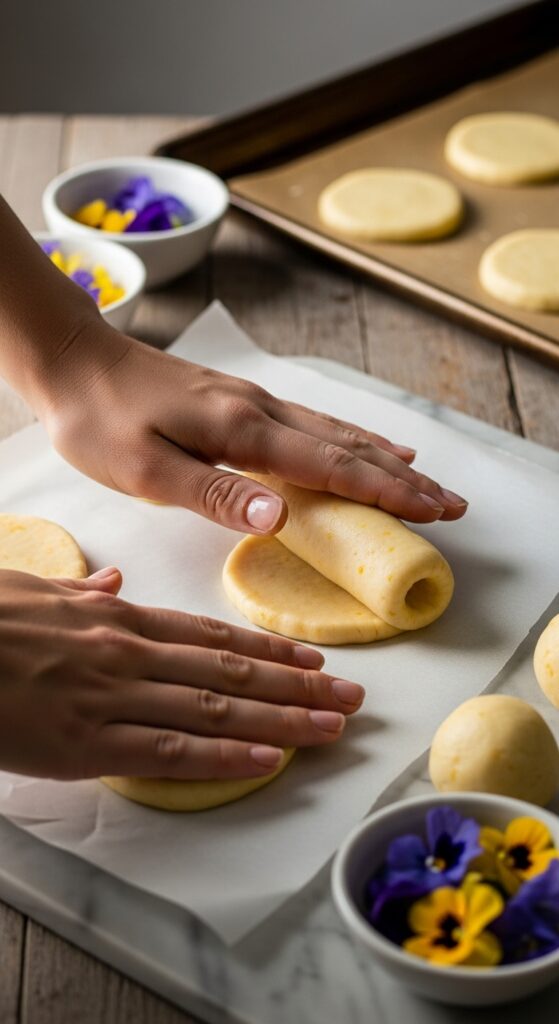
4. Shape the dough
You can roll it into balls and flatten, or roll it out and cut shapes. Circles mimic a garden stepping stone—my favorite.
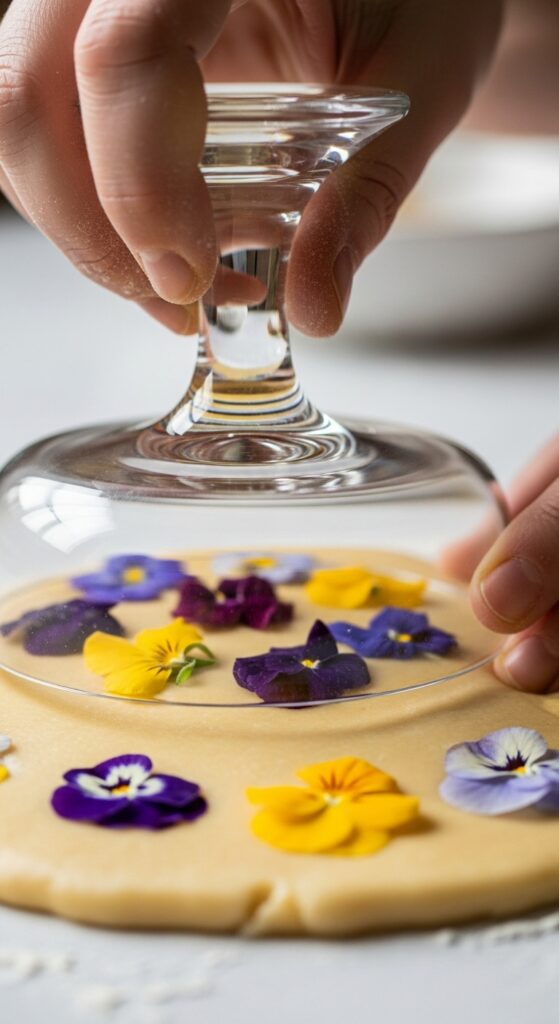
5. Press the flowers
This is the fun, slightly fiddly part. Arrange your petals and leaves. Press gently with the bottom of a glass. Brush with a thin wash to help colors set.
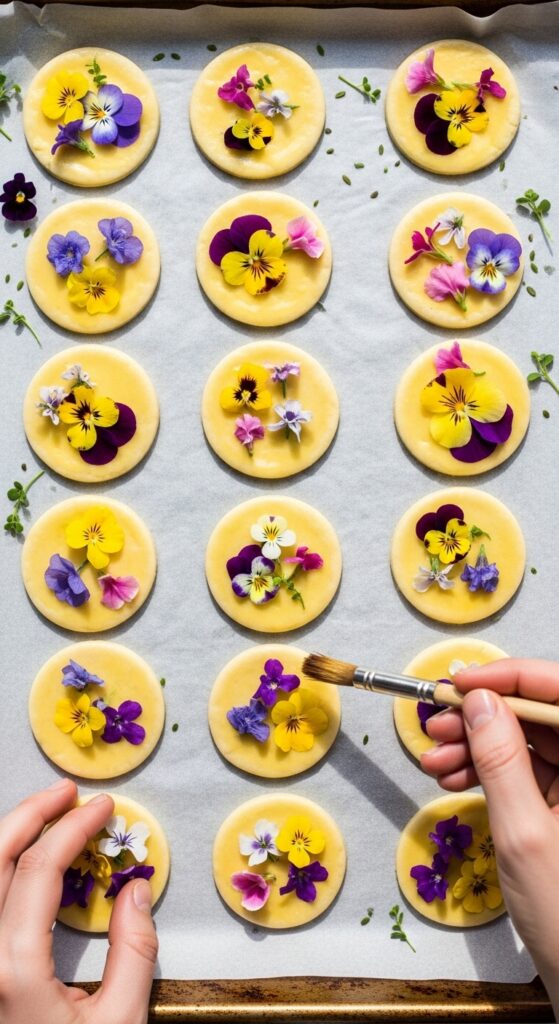
6. Chill the cookies
This keeps them from spreading in the oven. Even 20–30 minutes helps.
7. Bake until just lightly golden
Edges should be barely blonde. Overbaking dulls the petal colors.
Common Mistakes to Avoid
Pressing flowers too lightly—they’ll lift while baking.
Using thick, waxy flowers—they don’t bake well.
Skipping the chill time—your fairy garden becomes a floral puddle.
Variations
Lemon-Thyme Fairy Cookies
Add zest from one lemon and sprinkle thyme flowers on top.
Lavender-Honey Cookies
Mix ½ teaspoon ground culinary lavender with the sugar. Brush with honey after baking.
Vegan Fairy Garden Cookies
Use vegan butter, replace egg wash with oat milk, and bake a minute less.
Berry Garden Cookies
Add crushed freeze-dried strawberries to the dough for a pink tint.
The Science & Technique Behind the Magic
Shortbread-style dough works beautifully because it has a high butter-to-flour ratio, giving you that soft, buttery bite. When you cream butter and sugar, you incorporate air, which helps prevent a dense cookie.
Chilling is essential because it firms the fat. If the butter melts too fast in the oven, the cookies spread, and your delicate garden decor slides right along with it.
Pressing flowers onto slightly tacky dough and sealing them with egg wash anchors the petals during baking. The steam in the oven also softens the flowers so they adhere smoothly, almost like lamination.
Tools that help:
A flat-bottom glass for even pressing
Fine paintbrush for brushing wash
Parchment paper for smooth bottoms
Microplane for super-fine citrus zest
Edible flowers behave differently under heat. Pansies keep their shape best. Chamomile turns golden. Rose petals darken a touch. Embrace the variation—it adds charm.
👉 Fairy Garden Cookies Recipe Card
Prep Time: 20 minutes
Chill Time: 30 minutes
Cook Time: 12–14 minutes
Total Time: About 1 hour
Servings: 18–22 cookies
Nutrition (per cookie): ~115 calories, 5g fat, 2g protein, 15g carbs (approximate)
Ingredients
1 cup (226g) unsalted butter, softened
½ cup granulated sugar
1 ½ teaspoons vanilla extract or vanilla bean paste
Zest of 1 small lemon (optional but lovely)
2 ¼ cups all-purpose flour
¼ teaspoon salt
1 egg, lightly beaten (or oat milk for vegan)
Edible flowers and delicate herbs
Instructions
- Cream butter and sugar until light and fluffy, about 2–3 minutes.
- Mix in vanilla and lemon zest.
- Add flour and salt gradually until a soft dough forms.
- Roll dough into 1 ½-inch balls and flatten on a parchment-lined sheet, or roll and cut shapes.
- Arrange edible flowers on each cookie. Press gently with a flat-bottom glass. Brush lightly with egg wash.
- Chill cookies 20–30 minutes.
- Bake at 350°F (175°C) for 12–14 minutes, until edges are barely golden.
- Cool completely before handling so the flowers set.
Serving & Pairing Suggestions
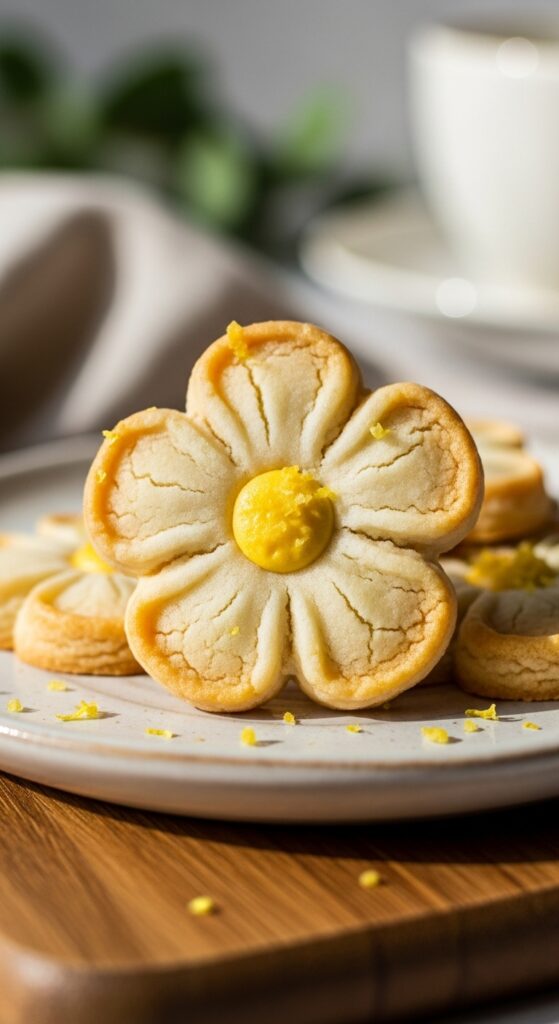
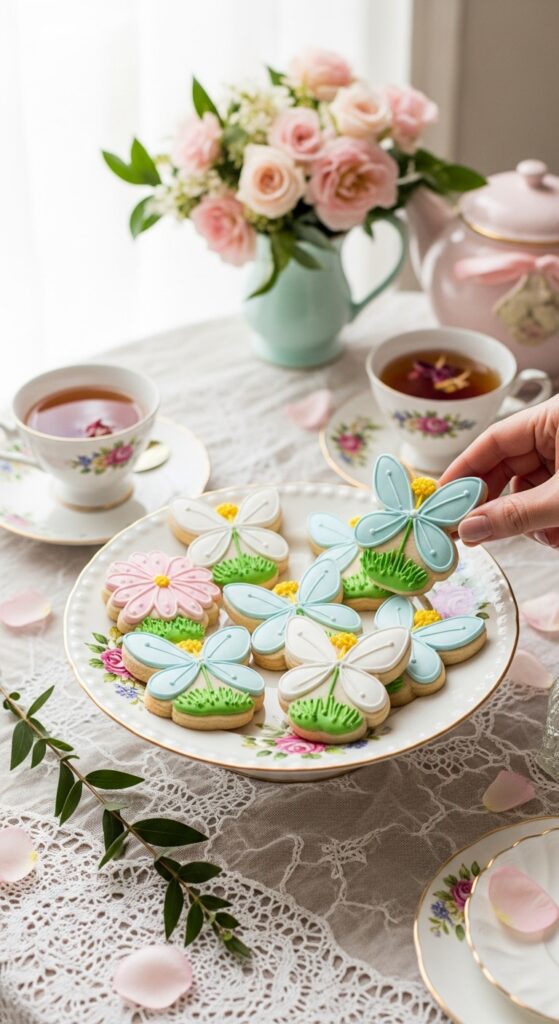
Serve these cookies with herbal teas like chamomile, mint, or lavender blends. The floral aromas play off each other nicely. They also shine on a dessert board alongside fresh berries, honeycomb, and soft cheeses like brie.
For parties, arrange them on a wooden board scattered with extra petals—it looks like a miniature enchanted forest. They pair surprisingly well with sparkling wine or lemonade infused with basil or thyme.
If you’re gifting them, nestle each cookie in parchment squares. They’re delicate, and the flowers deserve a soft landing.
Conclusion
Fairy Garden Cookies look fancy, but they’re wonderfully approachable. They invite you to slow down, pick your colors, and decorate without rules. Every batch comes out a little different, which is part of the charm. Once you learn how the dough behaves and which flowers you like best, you can create your own little worlds on each cookie.
Don’t worry about making them perfect. The magic is in the handmade, nature-inspired look. And the more you play with variations—citrus, herbs, berries—the more you’ll discover ways to make the recipe your own.
FAQs
How do I know which flowers are safe to use?
Stick to edible, pesticide-free flowers like pansies, violas, chamomile, lavender, rose petals, and thyme blossoms. If you’re unsure, don’t use it.
Can I freeze the dough?
Yes. Freeze shaped dough (without flowers) for up to 2 months. Thaw slightly, decorate, and bake.
Do the flowers change color in the oven?
Some do. Lavender dulls, pansies stay vibrant, chamomile turns golden. It’s normal and beautiful.
Can I make the cookies vegan?
Absolutely. Use vegan butter, skip the egg wash, and brush with oat milk instead.
Can I add icing?
You can, but keep it thin or drizzle-style so you don’t hide the garden designs.
If you’d like, I can also create a Pinterest description, social captions, or an image prompt to go with this recipe.

Selena is an experienced lifestyle blogger and the voice behind many of Cozy Toned’s inspiring posts. With a passion for mindful living, home styling, and everyday wellness, she shares practical tips and fresh ideas to help readers live beautifully and intentionally.